Key takeaways
- Browser privacy changes and consent rules mean ad platforms miss a share of real conversions.
- Consent Mode, the Meta Conversions API and server-side tagging recover much of that signal, privacy-safely.
- Better data means cheaper results, because smart bidding learns from more real outcomes.
Why conversion data goes missing
Browsers limit cookies, some visitors block trackers, and many decline consent. Each of these hides conversions from Google and Meta. The platforms then optimise on partial data, which usually means paying more for each result.
The three fixes
Consent Mode
Consent Mode tells Google's tags whether a visitor accepted cookies. Tags adjust their behaviour accordingly, and Google can model conversions from visitors who declined, instead of losing them entirely.
Meta Conversions API
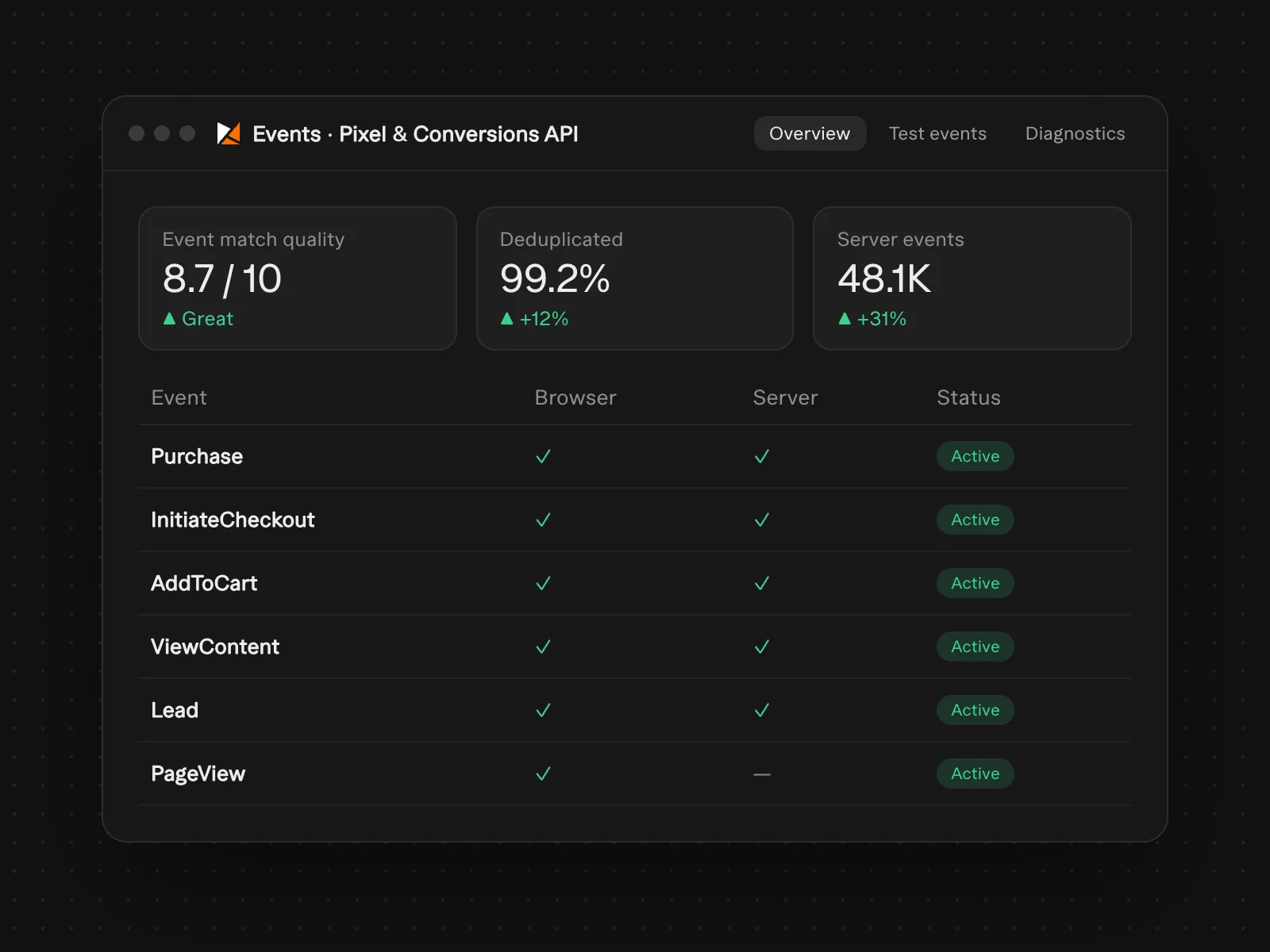
The Conversions API sends events like purchases and leads from your server or store platform directly to Meta, alongside the browser pixel. With deduplication, Meta counts each conversion once while seeing far more of them.
Server-side tagging
A server-side Tag Manager container moves tracking off the visitor's browser onto your own server. It improves data quality and control, and can make pages lighter. It's most worthwhile for stores and lead-gen sites with meaningful ad spend.
A sensible order of work
- Audit what's currently firing: duplicates, missing events and wrong values.
- Set up a consent banner and Consent Mode correctly.
- Add the Conversions API with deduplication.
- Consider server-side tagging once the basics are solid.
Frequently asked questions
Is this legal under GDPR?
Done properly, yes: it respects consent choices. Have your privacy policy and banner reviewed for your markets.
Do I need a developer?
Not always. Shopify and many WordPress setups have integrations; complex sites may need a little developer help.
How do I know it worked?
Compare conversions reported in the platforms against real orders or leads, and watch event match quality in Meta.