Key takeaways
- Start with repetitive, low-risk tasks where a human reviews the output.
- Give AI your context: brand voice, offers, audiences and examples.
- Measure time saved and quality, then expand what works.
The five workflows
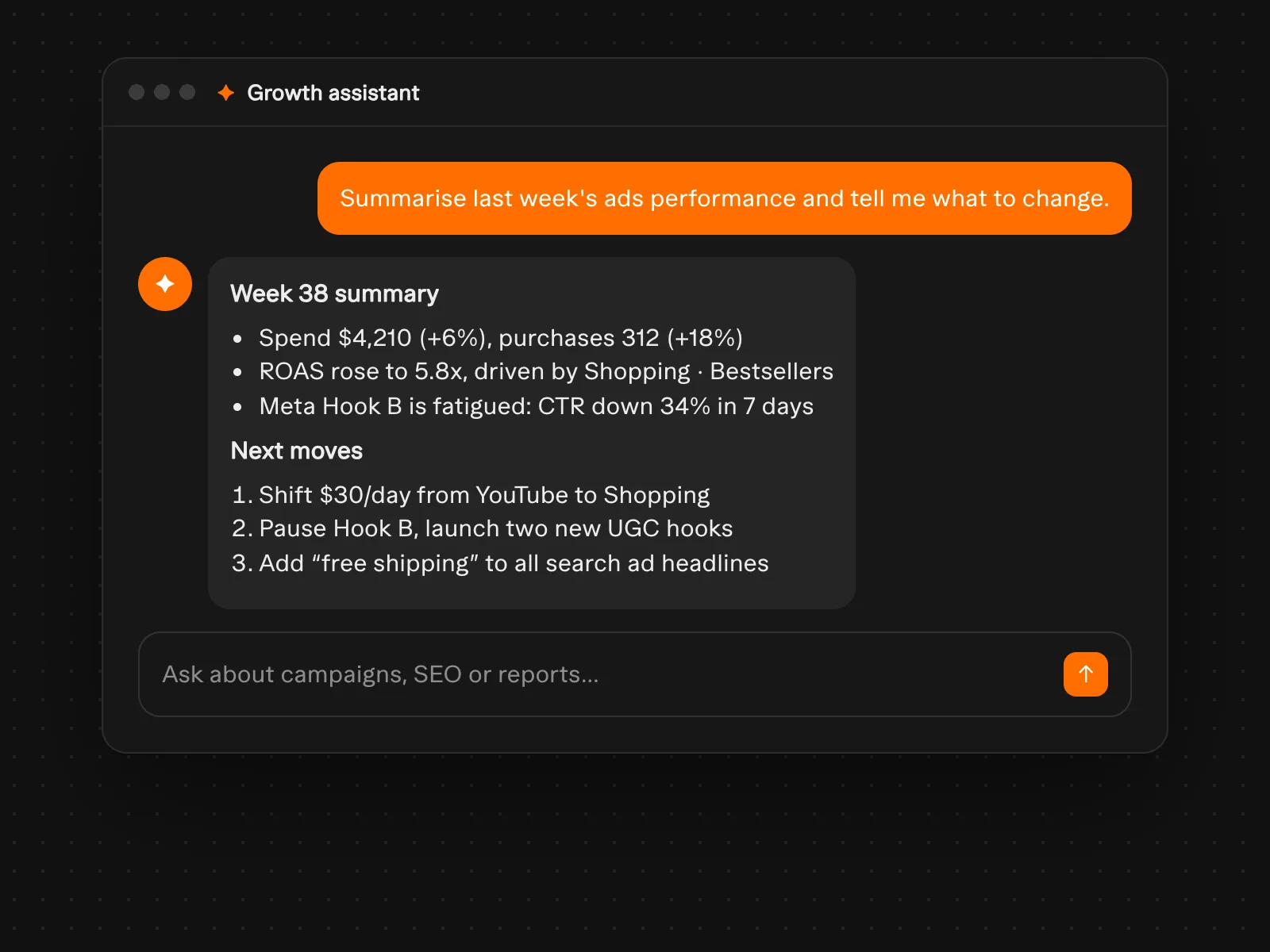
1. Weekly performance summaries
Export numbers from GA4 and your ad platforms, let an automation collect them, and have an AI model draft a plain-language summary of what changed and why it might matter. A human adds the decisions.
2. Content briefs
Feed keyword research, competitor pages and your notes into a model to produce a structured brief: search intent, outline, questions to answer and internal links. Writers start from a solid plan instead of a blank page.
3. Ad copy variations
Generate dozens of hooks and headlines from one angle, then pick the best to test. AI speeds up exploration; the testing still decides the winner.
4. Lead routing and follow-up
When a form is submitted, an automation can enrich the lead, classify it, draft a personalised reply and notify the right person. Faster follow-up usually means more closed deals.
5. A team assistant with company knowledge
A custom assistant loaded with brand guidelines, product details and FAQs helps everyone produce consistent drafts and answers without hunting through documents.
Keep it safe
Use business plans with proper data controls, decide what information should never be shared with AI tools, and keep a human in the loop for anything published or sent to customers. A one-page AI usage policy goes a long way.
Frequently asked questions
Which AI tool should we start with?
The one your team will actually use. ChatGPT, Claude and Gemini are all capable; the workflow matters more than the brand.
Will AI replace our marketing team?
It replaces repetitive tasks, not judgement. Teams that use it well spend more time on strategy and creative.
How do we measure the benefit?
Track hours spent on each task before and after, plus output quality and speed.